EXPANDING GIRLS’ HORIZONS IN STEM PATHWAYS THROUGH INTERVENTIONS WITH FEMALE ROLE MODELS
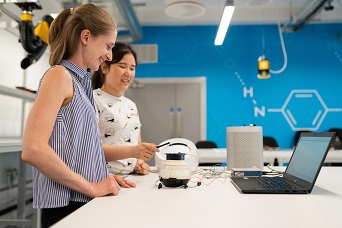
Over the past 15 years various initiatives and programs have been developed in many international contexts to reverse women’s underrepresentation in science, technology, engineering, and mathematics (STEM). These initiatives and programs are linked to gender inequalities in boys’ and girls’ performance in scientific and technological subjects, and also to girls’ growing lack of interest in choosing STEM studies, particularly in male-dominated STEM fields, such as engineering programs or computer science. These gender gaps are highly relevant not only because they generate social injustice, but also because of the significant loss of women’s talent in STEM.
HORIGESTEM addresses the hypothesis that interventions with female role models working in STEM will raise girls’ interest in STEM subjects and change stereotypes about women working in scientific and technological fields. It includes two studies to examine to what extent interventions with female role models working in STEM raise girls’ interest and enrolment in STEM fields:
- a quasi-experimental study with secondary students analyses how the mere exposure of girls and secondary students to female role model sessions enhance their STEM competence, their motivation and interest in STEM careers, and reduce their stereotypes about women in STEM.
- a qualitative study explores the effectiveness to attract and retain women in STEM of a mentoring program that promotes girls’ talent in STEM throughout the course of secondary education and beyond.
HORIGESTEM also includes pre-doctoral researchers who are developing their theses within the project: Miruna Bivol, with an FPI grant from the Ministry of Science and Innovation; Irune Ramírez Achutegui, with a FI Joan Oró grant from the Generalitat de Catalunya; and Rocío Segura Nebot, who participated in HORIGESTEM between 2023 and 2025 through the INVESTIGO program and carried out part of her doctoral thesis during this period.
The HORIGESTEM project is funded by the Ministry of Science, Innovation, and Universities, the State Research Agency, and the European Regional Development Fund (ERDF “A way to make Europe”) and has been carried out over three years, between 2022 and 2025. This research links to a new project with an international focus, HORIGESTEM EIRE, which reviews and compares the characteristics of initiatives based on female role models in STEM across Ireland and Spain.
Funded by: Grant PID2021-123049OB-I00 funded by MICIU/AEI/10.13039/501100011033 and by ERDF “A way of making Europe”.
Start date: 01/09/2022 – End date: 31/08/2025
Principal Investigator: Milagros Sáinz Ibáñez, director of Gender and ICT (UOC)
Research team:
Julio Meneses Naranjo (Lecturer at Universitat Oberta de Catalunya, researcher at Gender and ICT, UOC)
Sergi Fàbregues Feijóo (Lecturer at Universitat Oberta de Catalunya, researcher at Gender and ICT, UOC)
Susana González Pérez (Lecturer at Universidad CEU San Pablo)
Miruna Bivol (PhD Candidate at Gender and ICT, UOC)
Irune Ramírez Achutegui (PhD Candidate at Gender and ICT, UOC)
Rocío Segura Nebot (PhD Candidate at Universidad de Granada)
Collaborators:
Campbell Leaper (Professor at the University of California, Santa Cruz)
Research assistants:
Beatriz Soledad López Pérez (Gender and ICT, UOC)
María José Romano Serrano (Gender and ICT, UOC)
Funding body:

Related projects: